


In applying the provisions of this Law, the following words and phrases shall have the meanings assigned to each of them, unless the context otherwise requires: Ministry: Ministry of Commerce and Industry. Minister: Minister of Commerce and Industry. Competent Department: Competent administrative unit at the Ministry. Government Authority: Ministry, government agency, public authority or public institution. Private Sector: Private legal entity or alliance of a group of private legal entities. Partnership: An agreement between the Government Authority and Private Sector to implement and finance works or provide services, in accordance with one of the regulations stipulated in Article (3) of this Law. Contracting Authority: Any Government Authority that concludes a Partnership Contract with the Private Sector in accordance with the provisions of this Law. Project: Project to be implemented or developed through Partnership in accordance with the provisions of this Law. Project Committee: The committee that is formed for each Project in accordance with Article (6) of this Law. Project Company: The existing company or the company to be established for implementation of the Project. Partnership Contract: A contract concluded by the Contracting Authority with the Project Company for the purpose of implementing a Project. Partnership General Policy: The general principles of the Partnership established by the Competent Department and approved in accordance with the provisions of this Law. Project Policy Document: A document that regulates the main aspects of the Project Study and includes its supporting documents in accordance with the provisions of this Law. Project Study: The comprehensive detailed study that is prepared in accordance with the provisions of Article (7) of this Law
About Us
The Ministry of Commerce and Industry is responsible for overseeing commercial and industrial activities for the State of Qatar, directing these activities in accordance with the requirements of national development. The Ministry’s mandate includes business development needed to attract investments, and support and develop exports.
PPP Unit
The Public-Private Partnership unit is the unit at the Ministry of Commerce and Industry that supervises the implementation and regulation of public-private partnership projects that are decided to be implemented or developed in accordance with the provisions of Law No. (12) of 2020 regulating the partnership between the public and private sectors. It is the engine for setting the general principles of the partnership policy that helps to enable the implementation of partnership projects between the public and private sectors in the State of Qatar.
For any inquiries, please contact: moci-ppp@moci.gov.qa

Application Process
The concerned entity must submit an official initiation letter to the Business Development Department at the Ministry of Commerce and Industry. The letter should include the preliminary project needs assessment document (details and requirements are available in the procedures guide referenced below) for studying the feasibility of implementing the project under the public-private partnership system.
For any inquiries, please contact: moci-ppp@moci.gov.qa

Mission & Vision
The objectives of Qatar National Vision 2030 include:
- Sustainable development.
- Economic diversification.
- Increasing foreign investment.
The PPP Unit recognizes the importance of continuing the wheel of economic growth and increase foreign investments, which will lead to a “free international economy without geographical restrictions.” This strategic vision includes private sector involvement and participation, which can play an essential role in the accomplishment of QNV30, specifically through the efficient delivery of public services. It is also considered among the competencies of the Public-Private Partnership Unit to achieve the following strategic objectives:
- Building a sound ecosystem for partnership projects between the public and private sectors based on mutual trust and cooperation.
- Benefit from international experiences and best practices to educate the owners of partnership projects.
- Develop and maintain the expertise of partnership between the public and private sectors to support ministries and contracting bodies.
- Striving to develop a fair partnership process, characterized by responsibility and transparency.
- Develop a set of promising future projects to attract partnership with the private sector.
For any inquiries, please contact: moci-ppp@moci.gov.qa
Key Drivers for PPP
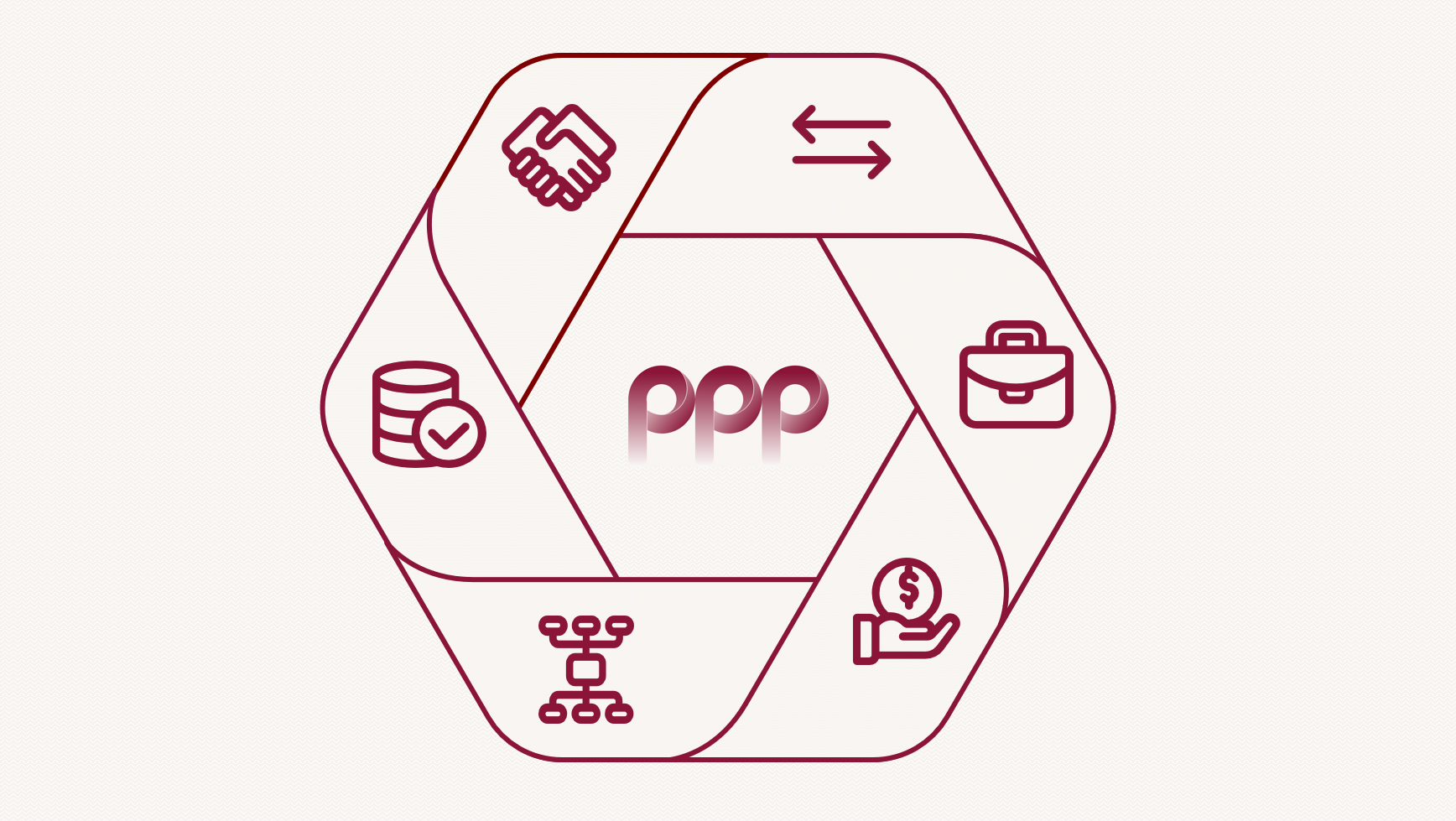
The State of Qatar seeks to benefit from all the advantages offered by the partnership process, and in this regard, it has issued Law No. (12) of 2020 regulating the partnership between the public and private sectors, to facilitate the development of partnership projects between the public and private sectors in the country. The law will enable government entities and the private sectors to enter in contractual agreements for the implementation and financing of assets and services., including, but not limited to, the following:
- Enhancing private sector participation in the development of infrastructure and implementation of socially impactful projects.
- Improving the efficiency of government services by leveraging private sector expertise.
- Facilitating the transfer of technology and innovation from the private sector to public service systems.
- Expanding the economic base and promoting diversification of income sources.
For any inquiries, please contact: moci-ppp@moci.gov.qa
Public-Private Partnership Regulation Law
View AllArticle (1)
Article (2)
Article (3)
Article (4)
Article (5)
Article (6)
Article (7)
Article (8)
Article (9)
Article (10)
Article (11)
Article (12)
Article (13)
Article (14)
Article (15)
Article (16)
Article (17)
Article (18)
Article (19)
Article (20)
Article (21)
Article (22)
Article (23)
Article (24)
Article (25)
Article (26)
Article (27)
Article (28)
Article (29)
Article (30)
Public-Private Partnership Policy Document and Guideline


Public-Private Partnership Projects
Projects Under Study
View AllWaste-to-Energy Facility – Phase (2)
The Ministry of Municipality seeks to build a second solid waste management center (DSWMC-2) to ensure a high level of waste utilization and recycling towards the goal of zero landfills in Qatar. Site area: 300 hectares, 60% of which is available for development. Capacity: 960,000 tons of municipal solid waste per year.


Dialysis Services
This project is part of the healthcare projects package expected to be studied in 2025. Project information will be updated as it becomes available.
Medical Commission
This project is part of the healthcare projects package expected to be studied in 2025. Project information will be updated as it becomes available.
Hospital Operations (HB + QRB)
This project is part of the healthcare projects package expected to be studied in 2025. Project information will be updated as it becomes available.
Long-term Care
This project is part of the healthcare projects package expected to be studied in 2025. Project information will be updated as it becomes available.
Hospital Operations - Primary Care Centers (PHCC’s)
This project is part of the healthcare projects package expected to be studied in 2025. Project information will be updated as it becomes available.
Home Care
This project is part of the healthcare projects package expected to be studied in 2025. Project information will be updated as it becomes available.
Radiology
This project is part of the healthcare projects package expected to be studied in 2025. Project information will be updated as it becomes available.
Laboratory Services
This project is part of the healthcare projects package expected to be studied in 2025. Project information will be updated as it becomes available.
Telemedicine
This project is part of the healthcare projects package expected to be studied in 2025. Project information will be updated as it becomes available.
Durable Medical Equipment
This project is part of the healthcare projects package expected to be studied in 2025. Project information will be updated as it becomes available.
Integrated Material Recovery and Bulky Wast Sorting Facility
The project includes the establishment of an integrated Material Recovery Facility (MRF), in addition to the development of a Bulk Waste Sorting Plant (BWSP) to process large-sized materials that are currently 100% landfilled, contributing to the recovery of recyclables and reducing reliance on landfills.
Latest News and Updates on Public-Private Partnership Projects
Frequently Asked Questions
The PPP law was introduced to encourage private sector participation in public projects, enhance economic diversification, and improve the efficiency and sustainability of public services. This aligns with Qatar's National Vision 2030.
The private sector is responsible for financing, operating, and maintaining the projects over a defined period. Upon completion of the contract term, the assets are typically transferred back to the public sector.
PPPs in Qatar can be implemented across a wide range of sectors, including but not limited to infrastructure development, healthcare, education, and transportation. There are no strict limitations on the types of projects that can be developed under a PPP framework, as long as they align with the country’s economic and development goals. The key objective is to leverage private sector expertise and efficiency to enhance public services and facilities.
Private entities can get involved by:
- Responding to government-issued requests for proposals (RFPs).
- Forming consortiums with other companies to bid on large-scale projects.
- Engaging in unsolicited proposals (subject to government approval).
The duration of a PPP agreement varies based on the nature of the project and the contractual terms agreed upon. Typically, PPP contracts last between 15 to 30 years, ensuring that private investors have sufficient time to recover costs and generate returns while maintaining long-term service quality. Under the Qatar PPP Law, the duration of a PPP agreement must not exceed 30 years. However, extensions and some exemptions may be considered under specific circumstances, subject to government approval.