
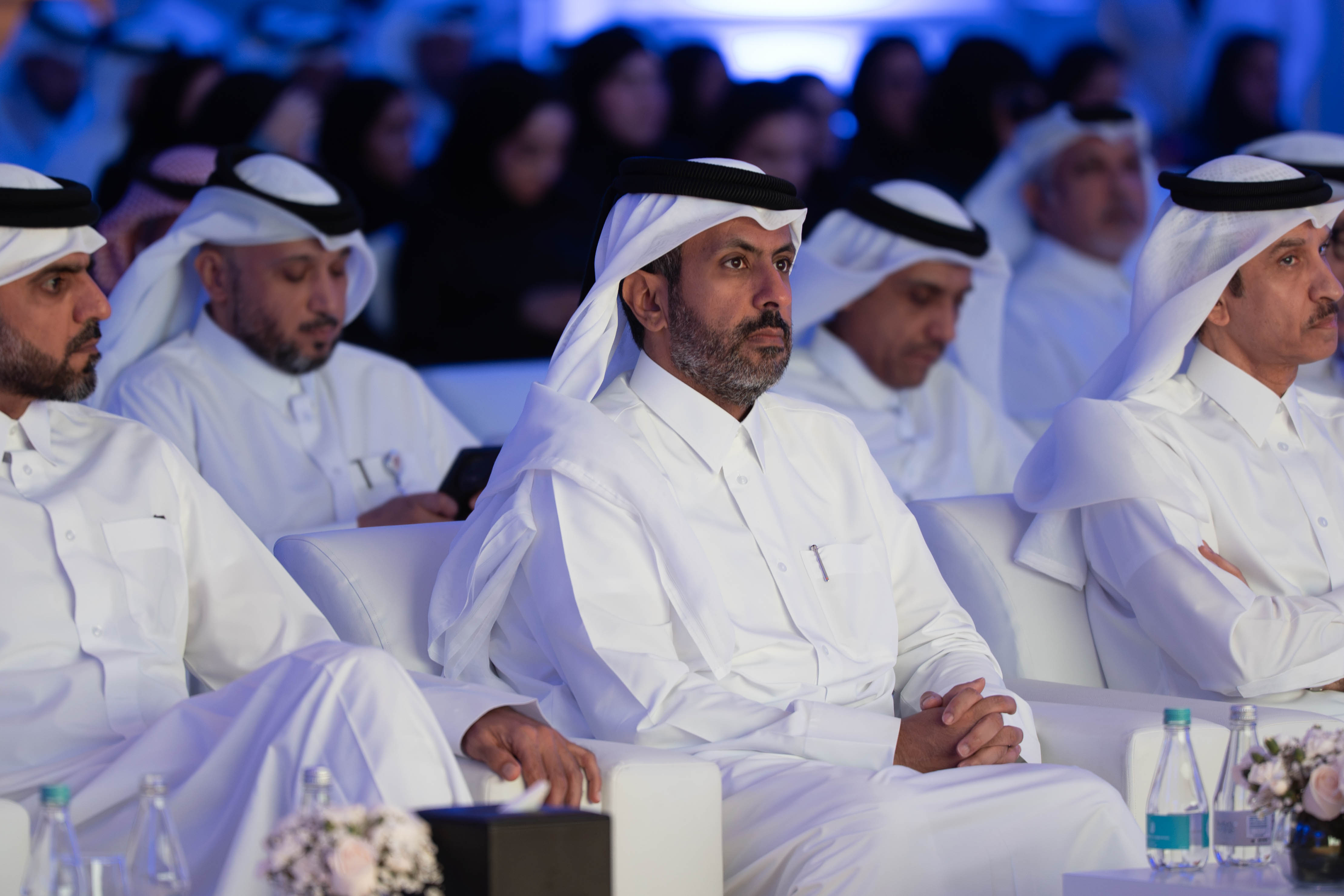
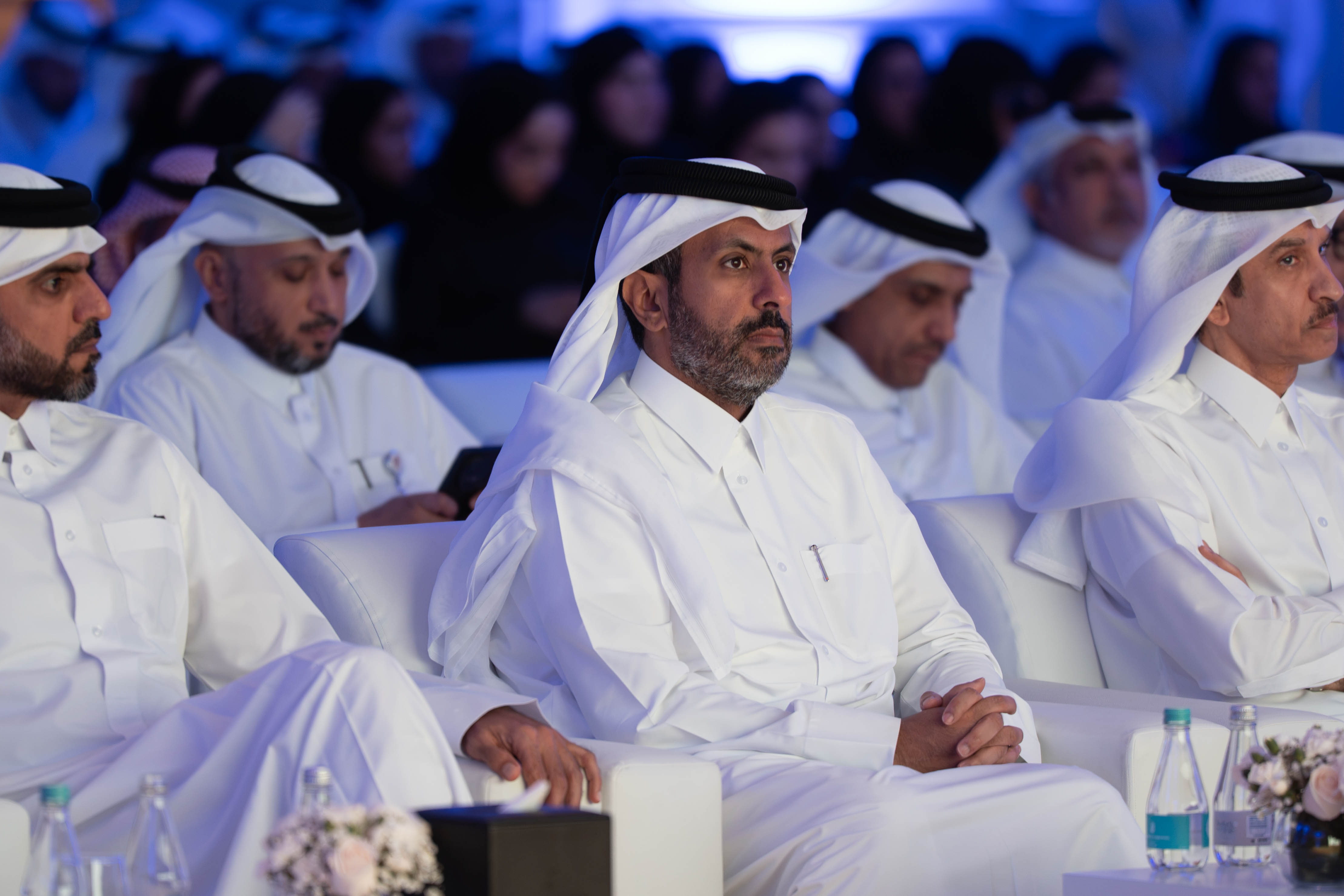
H.E. Minister of Commerce and Industry Inaugurates Second Edition of Public-Private Sector Dialogue Forum
H.E. Sheikh Faisal bin Thani bin Faisal Al Thani, Minister of Commerce and Industry, inaugurated today, Wednesday, 25 November 2026, the second edition of the Public-Private Sector Dialogue Forum, organised by the Ministry of Commerce and Industry. The forum was attended by a number of senior officials and private sector representatives, and aimed to discuss the key challenges facing the business environment, explore practical solutions and joint initiatives, and contribute to improving the business environment and strengthening the partnership between the two sectors.
In his opening remarks, H.E. Sheikh Faisal bin Thani bin Faisal Al Thani, Minister of Commerce and Industry, emphasised that the second edition of the forum builds on the dialogue initiated a year ago and reinforces the conviction that building the envisioned economy cannot be achieved through the efforts of the government or the private sector alone. Rather, it requires a partnership between both sides, open dialogue and shared responsibility.
Additionally, His Excellency noted that this partnership had been tested amid the circumstances experienced by the region since the end of February, and the resulting disruptions to trade and supply chains. He highlighted its important role in maintaining market stability and strengthening public confidence, with goods remaining available, factories continuing operations and supplies flowing uninterrupted, thanks to cooperation and coordination between government institutions and the private sector. His Excellency also expressed his appreciation to the Ministry’s private sector partners for their cooperation and efforts to ensure business continuity and meet the needs of the local market during this period.
His Excellency explained that the State of Qatar seeks to strengthen the private sector’s role in driving economic growth, increasing exports, encouraging innovation and creating high-quality opportunities for future generations. He reaffirmed the government’s commitment to fostering a business environment characterised by clarity, flexibility and efficient procedures, enabling capital, expertise and innovation to contribute to building a more diversified and sustainable economy. He further stressed the importance of establishing dialogue between the two sectors as an institutional approach based on listening, follow-up, accountability and continuous improvement, making relations between the government and the private sector more responsive, responsibilities clearer and engagement more closely aligned with the needs of investors and the market.
Furthermore, His Excellency highlighted that economic indicators demonstrate progress across several areas, with cumulative industrial investment reaching approximately QAR 248.3 billion, the proportion of exporting factories rising to 25% during the current year, and private sector exports growing by 12.5%, alongside continued growth in new business establishments. He explained that these indicators reflect the combined efforts of government entities and the private sector, underscoring the importance of building on this momentum and continuing to address obstacles that limit growth opportunities.
His Excellency noted that the region had faced exceptional circumstances since the end of February, with repercussions extending to trade flows and supply chains. He explained that the priority had been to ensure that the basic needs of consumers in the State of Qatar were met while maintaining uninterrupted production at factories. He added that the situation required intensified market inspections and the activation of a round-the-clock operations centre, with more than 300 inspectors deployed in the field and all complaints addressed within 24 hours. He further explained that supporting the private sector was essential to addressing supply chain challenges through support and financing programmes for raw materials and logistics services, alongside continuous monitoring of the availability of 57 strategic food commodities, with imports of these commodities from 39 countries valued at approximately QAR 8.38 billion.
His Excellency emphasised that the next phase requires advancing the partnership between the two sectors, directing investment towards value-added sectors, supporting national companies in accessing global markets, and leveraging innovation to achieve sustainable economic growth. He expressed confidence in the ability of Qatar’s private sector, drawing on its experience and resilience, to lead new growth opportunities. His Excellency also stressed the importance of ensuring that the forum produces clearly defined priorities, responsibilities and tangible outcomes that benefit both investors and consumers, rather than merely generating another list of recommendations.
As part of the forum’s proceedings, Mr. Saleh Majed Al-Khulaifi, Assistant Undersecretary for Industry and Business Development at the Ministry of Commerce and Industry, delivered a presentation reviewing the outcomes of a year of joint work since the forum’s first edition. The presentation covered the efforts and achievements of the Business Environment Development Committees, initiatives undertaken by the National Committee for the Development of Small and Medium Enterprises, and key initiatives and projects implemented during 2026 to streamline procedures, facilitate business activities and strengthen channels of communication and engagement with the private sector, contributing to addressing its challenges and improving the business environment in the State.
Mr. Talal Abdullah Al-Sheebi, Assistant Chairman for Customs Affairs at the General Authority of Customs, also delivered a presentation highlighting the Authority’s efforts to enhance customs services and facilitate trade through the Al Nadeeb single-window customs clearance system, the adoption of digital solutions and artificial intelligence technologies, and the acceleration of customs clearance and release procedures. The presentation also addressed initiatives aimed at meeting private sector needs and improving the efficiency and flow of supply chains.
The forum featured a panel discussion titled “The Role of Legislation and Government Integration in Developing Government Services”, with the participation of Mr. Saleh Majed Al-Khulaifi, Assistant Undersecretary for Industry and Business Development at the Ministry of Commerce and Industry; Mr. Khamis Mohammed Al Nuaimi, Assistant Undersecretary for National Workforce Affairs in the Private Sector at the Ministry of Labour; and Mr. Ghanim bin Khalifa Al-Attiyah, Assistant President for Tax Affairs at the General Tax Authority. The session discussed developments in legislation and policies affecting the business environment, as well as the role of coordination and integration among government entities in enhancing service delivery, making services faster and clearer, and ensuring their alignment with the needs of investors and the market.
The forum concluded with discussion sessions held by the Business Environment Development Committees, bringing together representatives of relevant government entities and the private sector. The sessions addressed a range of issues and challenges related to the industrial, commercial, logistics, healthcare and technology sectors, in addition to matters concerning legal cases and courts. These discussions provided a platform for exchanging views and exploring practical solutions and proposals, supporting improvements to the business environment while strengthening communication and coordination between government entities and private sector representatives.