

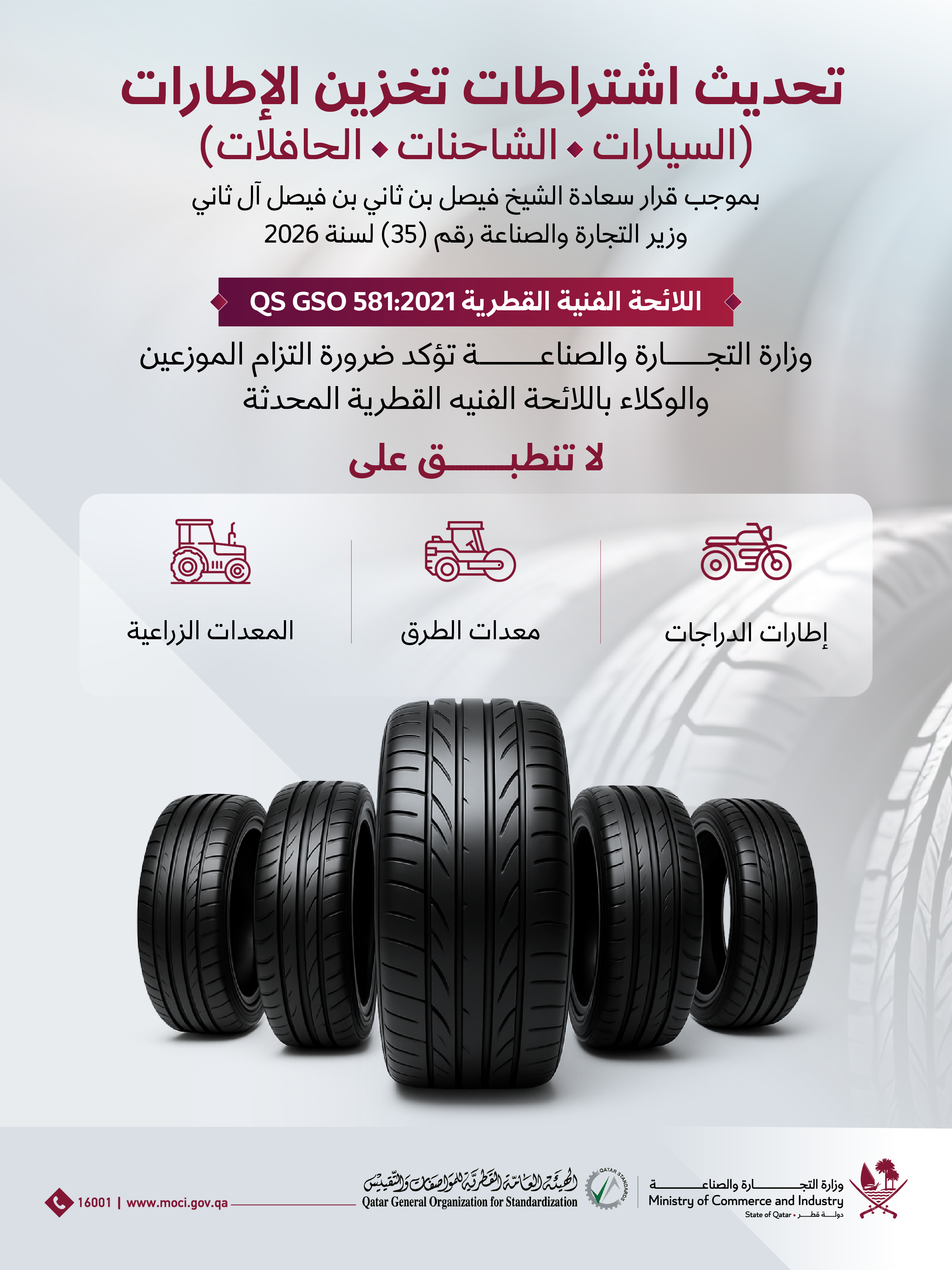
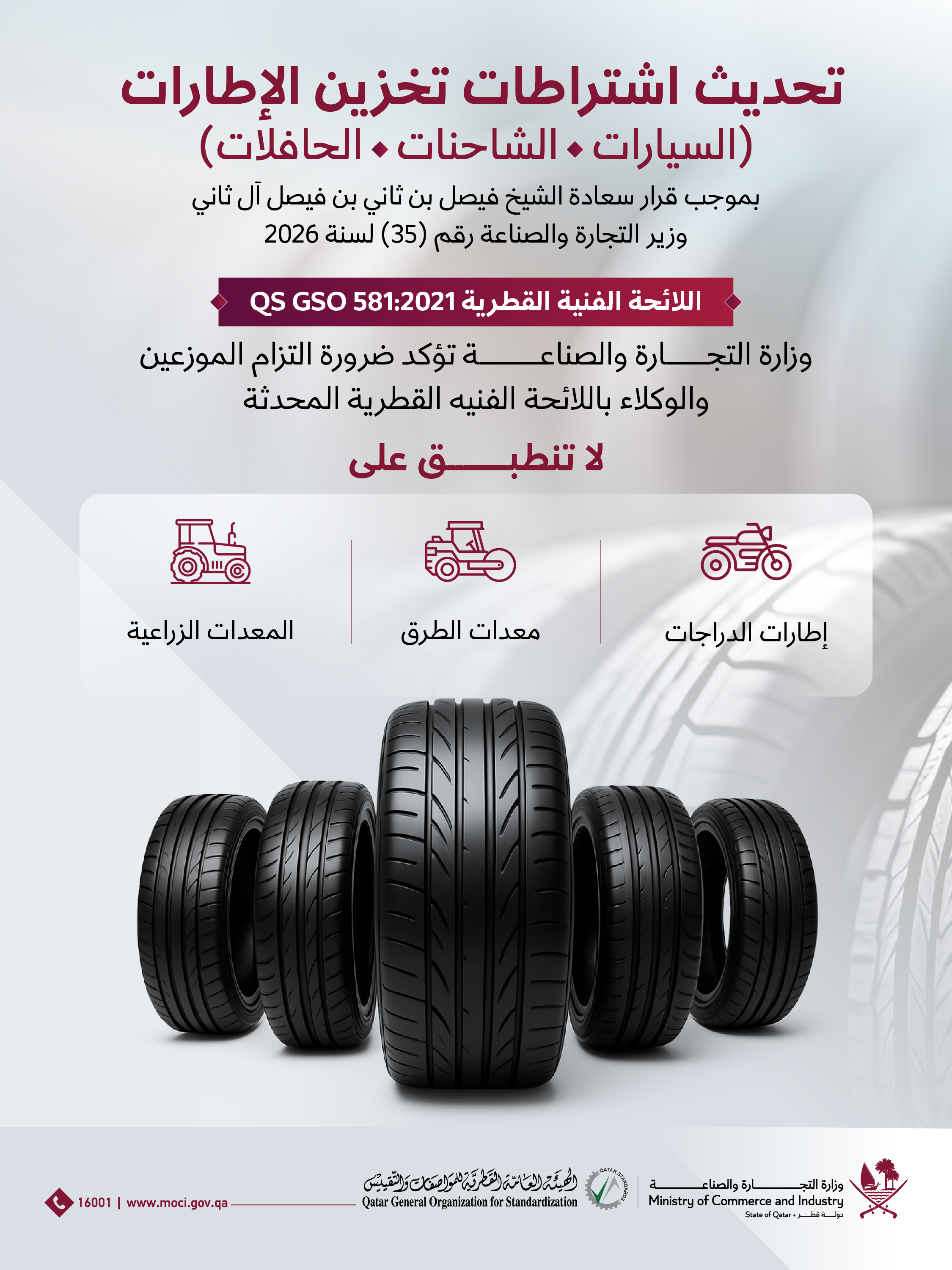
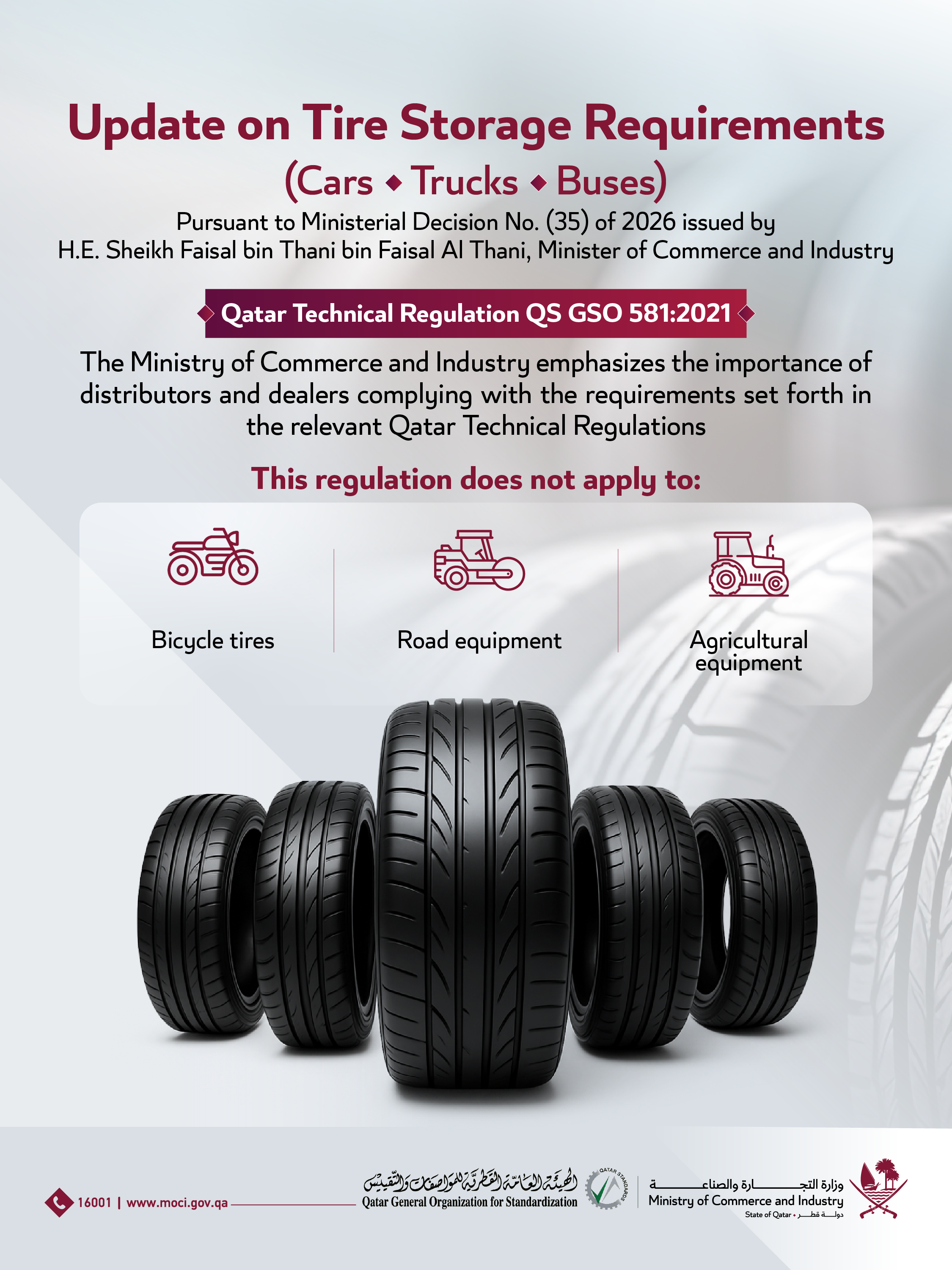
The Ministry of Commerce and Industry (MOCI) has emphasised the importance of complying with Qatar Technical Regulation QS GSO 581:2021 for the Storage Requirements of Passenger Car, Truck and Bus Tyres, issued pursuant to Ministerial Decision No. (35) of 2026 by H.E. Sheikh Faisal bin Thani bin Faisal Al Thani, Minister of Commerce and Industry.
The Decision forms part of the Ministry’s and the Qatar General Organisation for Standardization’s efforts to further develop technical regulations and standards in line with international best practices.
The technical regulation aims to enhance the safety of tyres available in the local market through the implementation of clear requirements governing storage and handling practices. This contributes to preserving tyre quality and operational performance, reducing risks associated with improper storage, strengthening consumer protection and enhancing road safety.
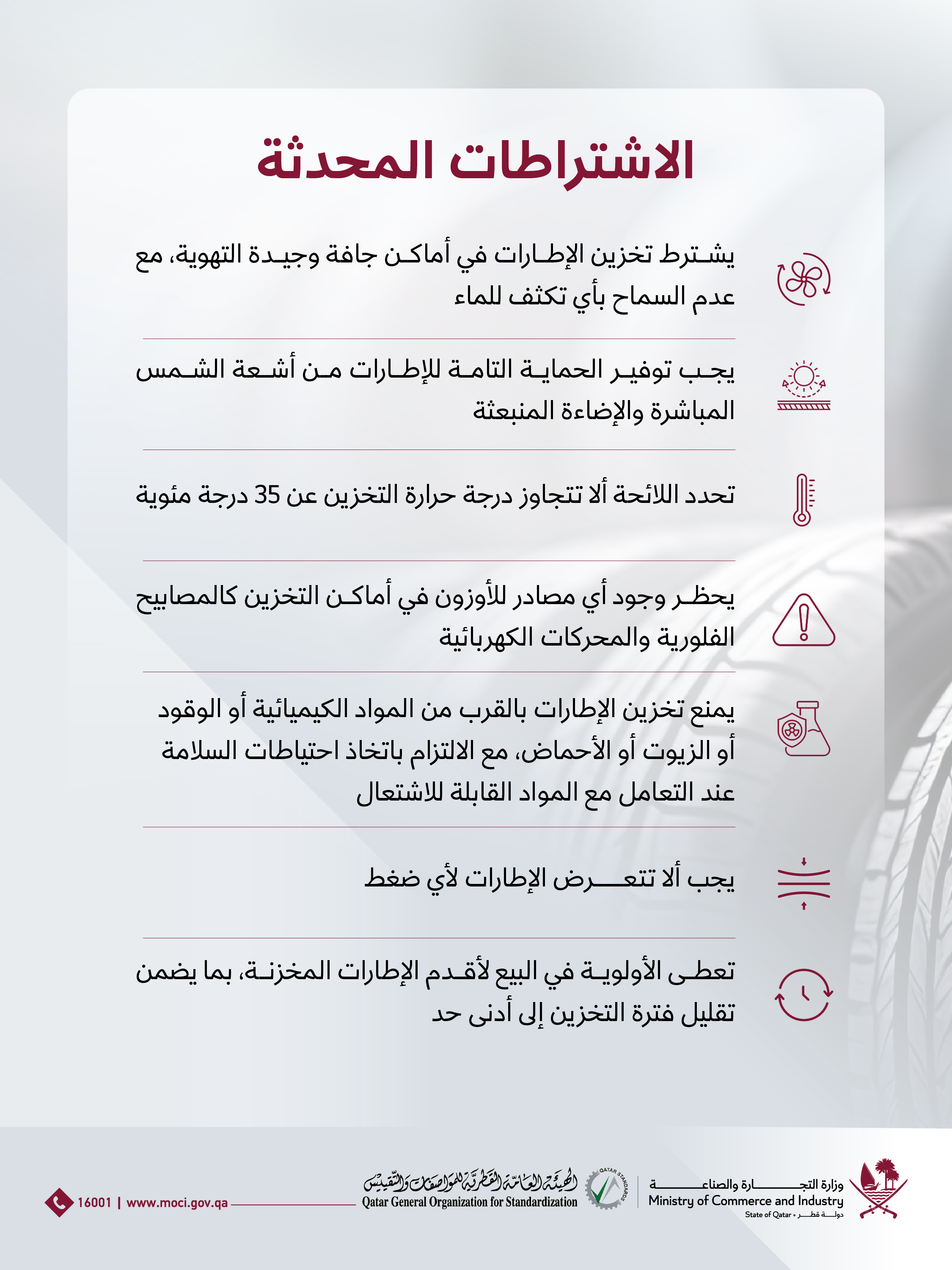
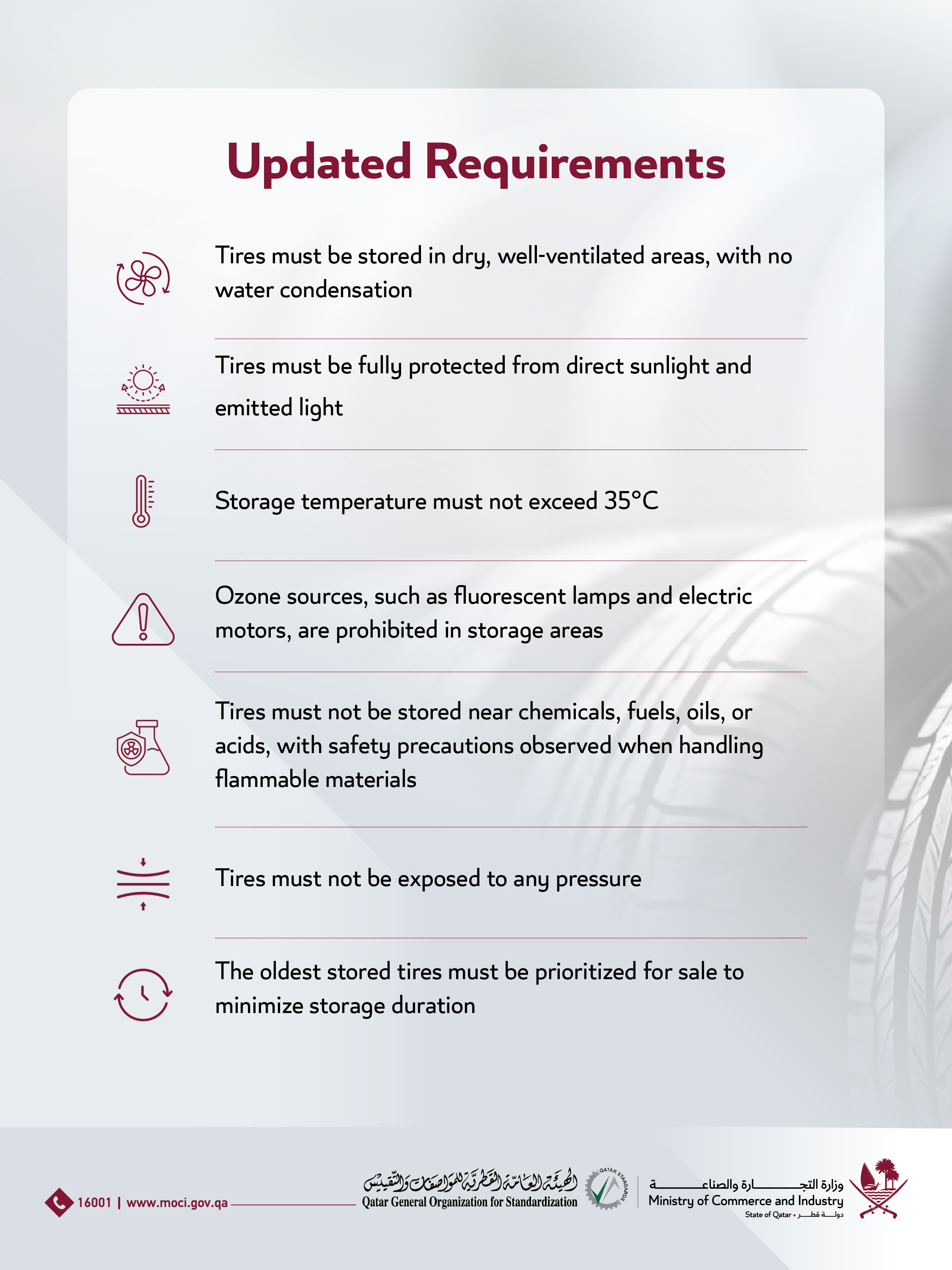
The regulation applies to the storage requirements of passenger car, truck and bus tyres and does not apply to bicycle tyres, road equipment or agricultural equipment. It also sets out several requirements relating to storage areas, including the need to store tyres in dry, well-ventilated locations at temperatures not exceeding 35°C, while protecting them from water condensation, direct sunlight and ultraviolet radiation.
The regulation further prohibits ozone-generating sources, such as fluorescent lamps and electric motors, within storage areas. It also prohibits the storage of chemicals, oils and fuel near tyre storage locations and requires compliance with general safety requirements relating to protection against fire and dust storms.
Regarding storage and handling procedures, the regulation emphasises the need to arrange tyres in a manner that prevents exposure to pressure or tension that may cause permanent deformation. It also requires that the oldest stored tyres be prioritised for sale to minimise storage periods.
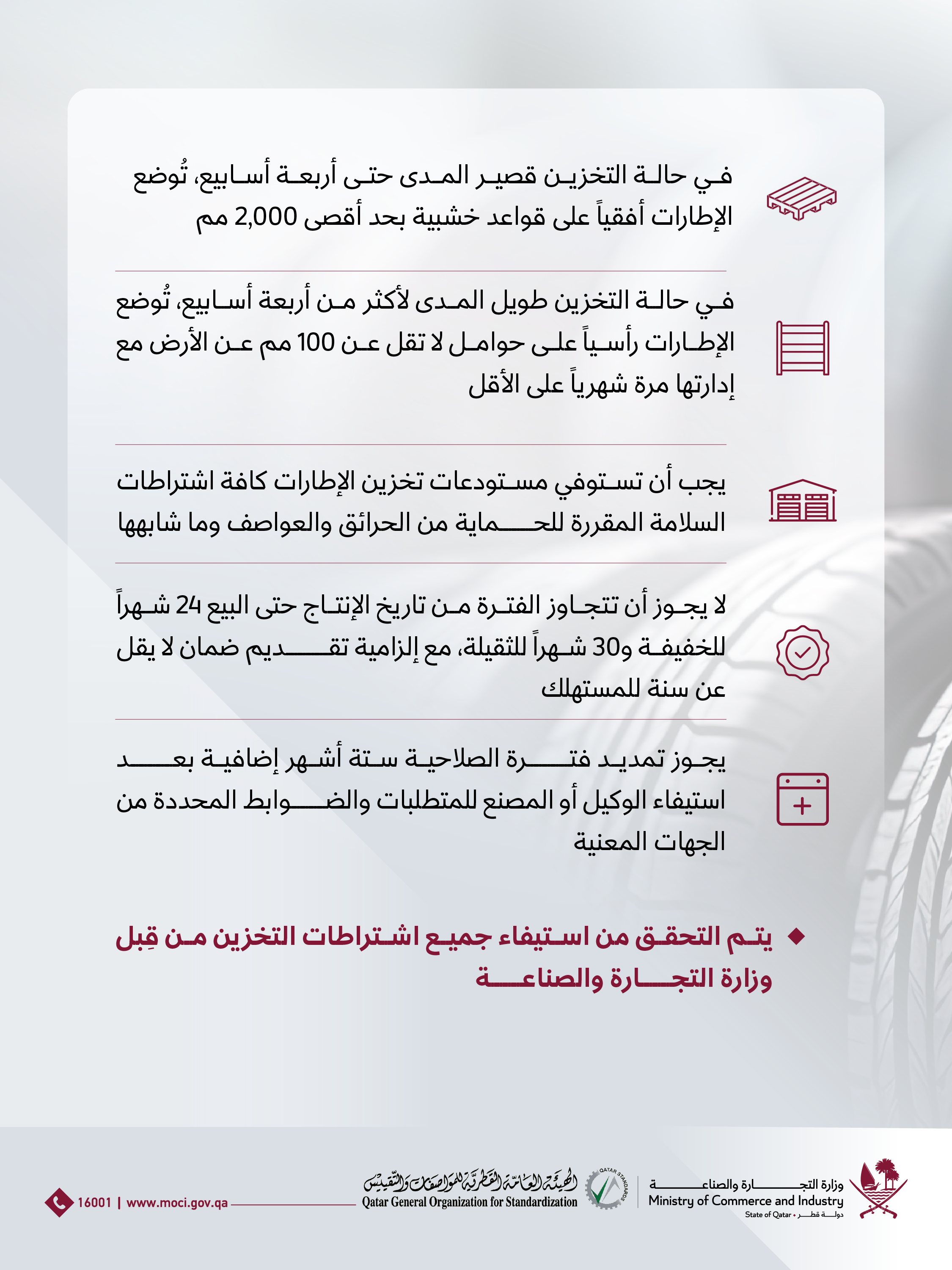
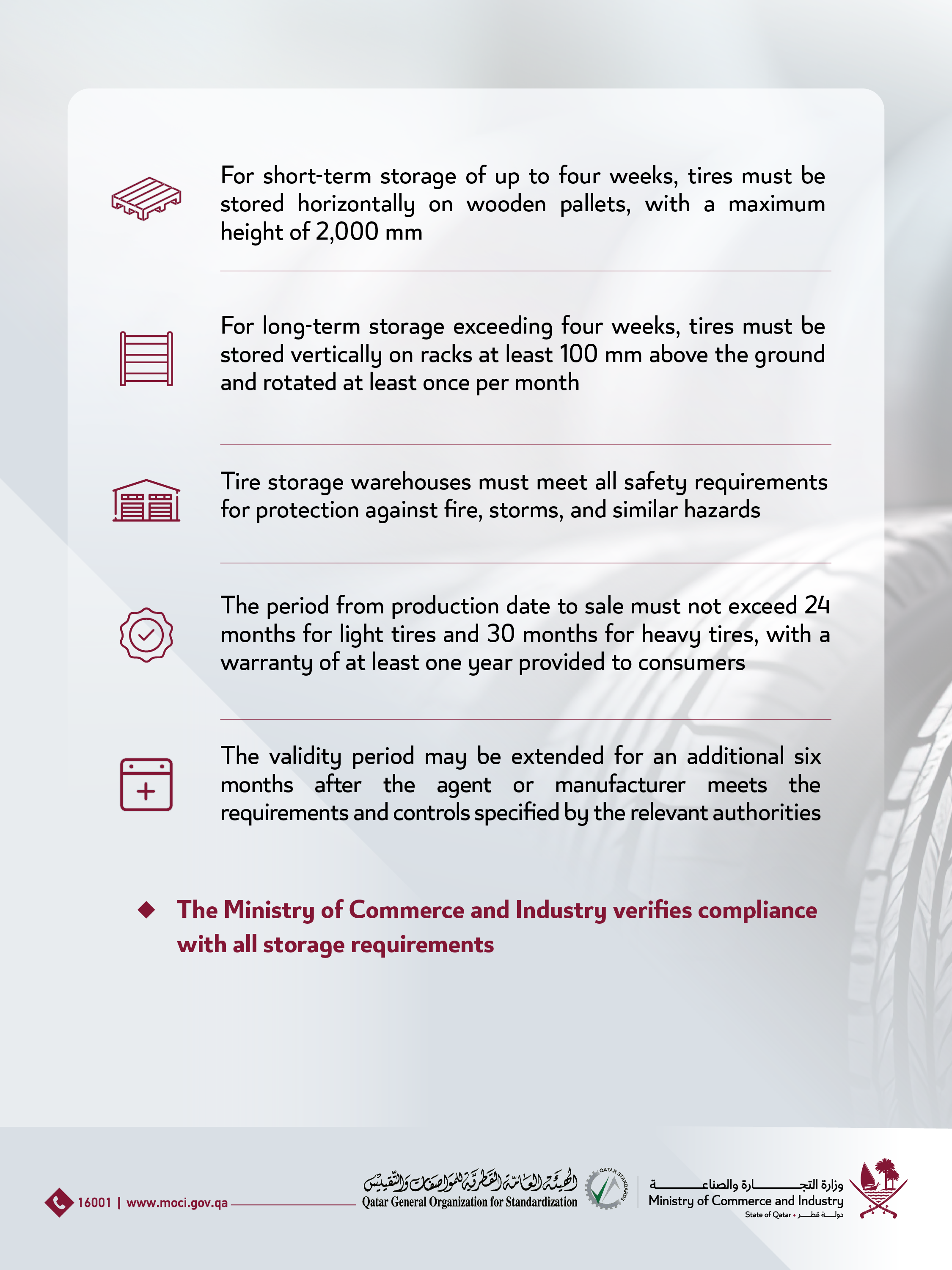
The regulation specifies storage methods according to storage periods. For short-term storage of up to four weeks, tyres must be stored horizontally on wooden pallets, with a maximum stack height of 2,000 mm. For storage periods exceeding four weeks, tyres must be stored vertically on racks at least 100 mm above ground level and rotated monthly to prevent deformation.
The regulation also stipulates that the period from the date of manufacture to sale must not exceed 24 months for passenger car tyres, bus tyres and light truck tyres, and 30 months for heavy truck tyres. The validity period may be extended by an additional six months, provided that the agent or manufacturer complies with the approved requirements and controls.
These requirements include providing a manufacturer’s warranty confirming the tyre’s suitability for use for a period of not less than five years under normal operating conditions, in addition to providing consumers with a warranty of not less than one year and ensuring full compliance with all storage requirements stipulated in the technical regulation.
The Ministry of Commerce and Industry stressed the importance of compliance by all distributors, dealers and tyre sales and storage outlets with the provisions of the technical regulation, noting that such compliance contributes to maintaining tyre quality and safeguarding consumer safety.
The Ministry further affirmed that adherence to the approved requirements and controls constitutes a fundamental responsibility to ensure that products traded in the State conform to the highest approved standards and specifications, while avoiding any legal measures that may be taken against violators.