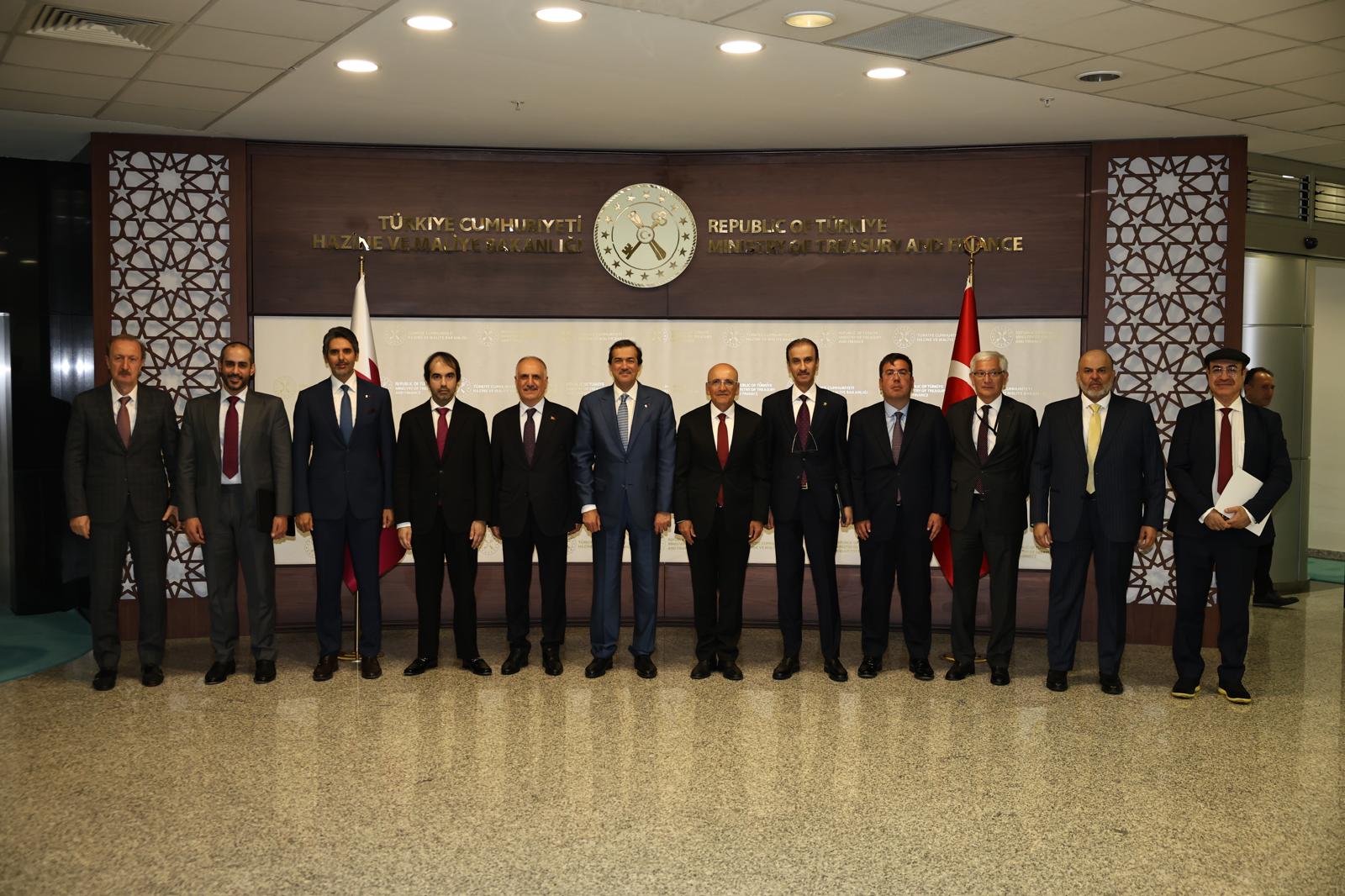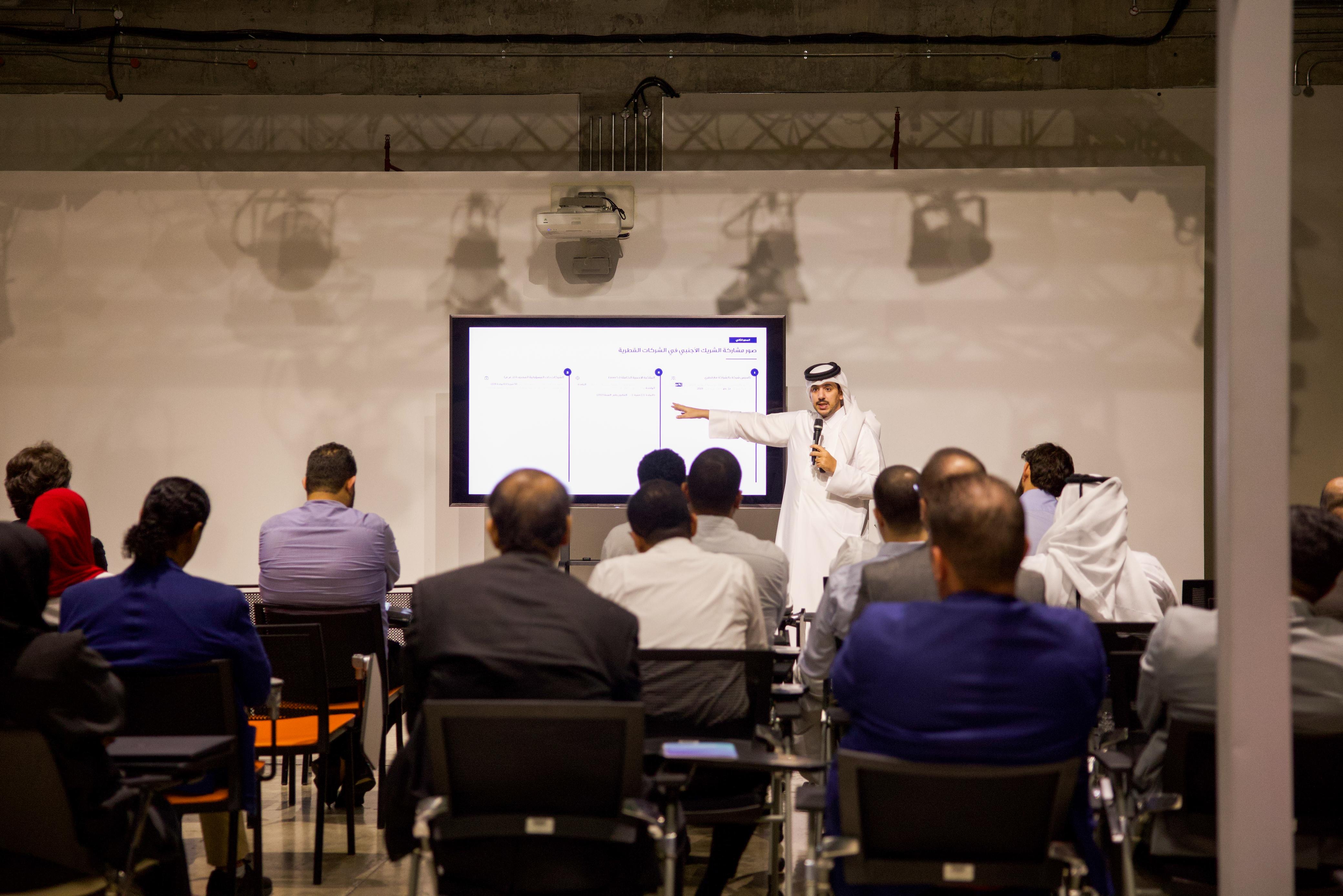


The Ministry of Commerce and Industry today hosted the First Public–Private Sector Dialogue Forum, bringing together senior government officials and private sector representatives. The inaugural event provided a platform to tackle key challenges, develop practical solutions and initiatives, and strengthen cooperation between both sectors in support of Qatar’s economic development.
In his opening address, H.E. Mr. Mohammed bin Hassan Al-Malki, Undersecretary of the Ministry of Commerce and Industry, affirmed that convening the forum reflects the Ministry’s commitment to establishing direct and regular communication with the private sector. He stressed that the forum fosters transparency and trust, while enabling the exchange of perspectives and the development of recommendations aligned with national economic priorities.
Mr. Al-Malki noted that Qatar’s economy continues to achieve rapid growth and attract investment under a clear strategy for diversification, with the private sector positioned to drive the next phase of growth in line with the Third National Development Strategy, the final stage of Qatar National Vision 2030.
Highlighting recent achievements, he pointed to major reforms that have improved the business environment through legislative updates, regulatory changes, and digital solutions. These measures have significantly enhanced Qatar’s global standing: the country now ranks ninth in the 2025 IMD World Competitiveness Ranking, entered the top ten for the first time, and rose to fifth place worldwide in the Business Efficiency pillar.
Al-Malki added that business procedures have also been streamlined. Investors now automatically receive a tax number upon issuance of a commercial registration, alongside approvals for labour recruitment. Ninety-five percent of services are available online via the single-window platform, and a new multilingual portal has been launched to serve both local and international investors. Foreign investors can now participate in more than 1,400 business activities.
Further reforms include the removal of requirements to match commercial activities for imports and the adoption of a unified GCC customs tariff, reducing costs, broadening sourcing options, and eliminating shipment rejections due to licensing. Industrial incentives—such as reduced leasing rates for industrial, logistics, and commercial land—are saving the private sector more than QAR 100 million annually. In addition, environmental permit processes have been simplified for 90% of industrial activities, lowering costs, enhancing project feasibility, and supporting entrepreneurship in value-added sectors.
Mr. Al-Malki confirmed that the Ministry, to strengthen the legal framework, is preparing new legislations, including an updated Public–Private Partnership Law, a Foreign Investment Law, and a Bankruptcy Law, all aligned with international best practices.
H.E. the Undersecretary of the Ministry of Commerce and Industry emphasised that the private sector is a key partner in Qatar’s development journey. He underscored that constructive cooperation and the integration of efforts between government and business are essential to transforming challenges into opportunities. He further affirmed the Ministry’s commitment to convening this forum on a regular basis to advance its ambitious goals.
The forum featured a panel discussion with H.E. Mr. Al-Malki, H.E. Mr. Saeed bin Abdullah Al-Suwaidi, Undersecretary of the Ministry of Justice, and H.E. Sheikha Najwa bint Abdulrahman Al Thani, Undersecretary of the Ministry of Labour. The panelists reviewed achievements and recent regulatory reforms that have enhanced the business environment and supported private sector growth.
During the session, H.E. the Undersecretary of the Ministry of Commerce and Industry reaffirmed the Ministry’s commitment to implementing a series of initiatives aimed at simplifying business establishment and operations while creating a more attractive investment climate. He explained that these initiatives include comprehensive company incorporation upon issuance of the commercial registration, which now automatically generates the company card and tax number, provides approvals for labour recruitment, and offers a commercial name reservation service. These measures have helped reduce establishment times, minimise the number of government entities to be approached, ensure compliance with trade name requirements in advance, and allow companies to track their incorporation applications.
He also referred to the development of the commercial activity classification system through the adoption of the ISIC 4.0 framework, as well as the activation of the Unified Economic Register data platform for search and retrieval. These steps enable alignment with international classifications, facilitate benchmarking and research, improve data quality to support policy and development planning, reduce the time required to verify company data, and open new and complementary investment opportunities both domestically and internationally.
H.E. Mr. Saleh Majid Al-Khulaifi, Assistant Undersecretary for Industry and Business Development, delivered a presentation outlining the Ministry’s main initiatives to strengthen partnership with the private sector. These include the creation of sectoral committees covering industry, trade, logistics, health, and technology, tasked with monitoring sector-specific challenges and proposing practical solutions. He noted that the Ministry’s “roundtable” initiative has already produced several solutions that have been implemented, while others remain under study or in progress.
The forum concluded with working sessions led by the Business Environment Development Committees, with the participation of sectoral committees and private sector representatives across industry, trade, logistics, health, and technology. The sessions provided a platform to exchange views, discuss challenges, and propose actionable solutions to advance the forum’s objectives.